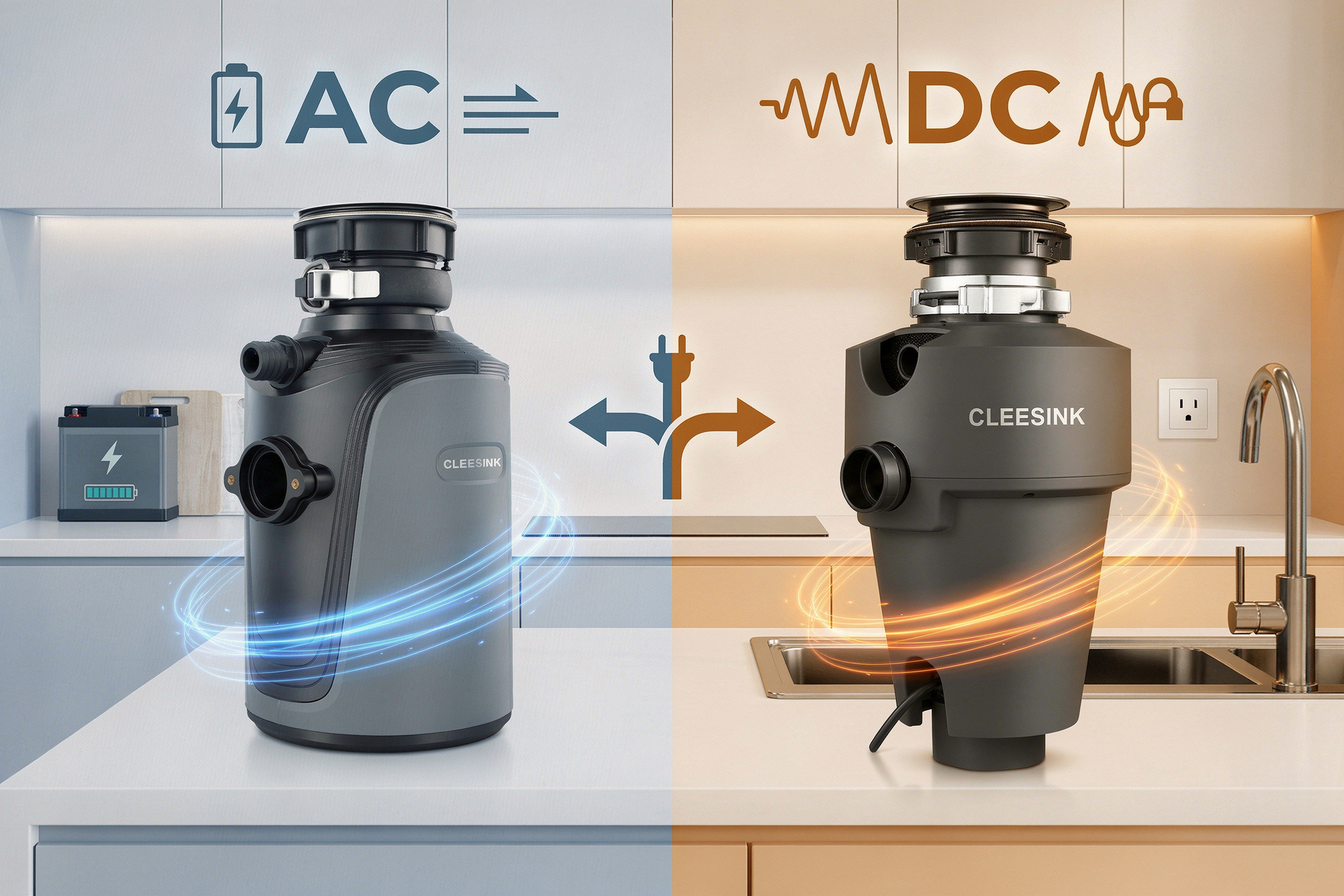
AC vs. DC Motors: The Ultimate Guide to Choosing the Right Garbage Disposal for Your Market
Editor:Hangzhou Cleesink Mechanical & Electrical Co., Ltd
Date:2026-06-08 10:32:36
Views:0
Introduction: The Heart of the Machine
When selecting a food waste disposer for your residential projects or retail brand, the most critical decision lies beneath the sink: the motor. In the world of waste management, there are two dominant technologies—AC (Alternating Current) Induction Motors and DC (Direct Current) Permanent Magnet Motors.
But which one is superior? The answer depends on your specific market needs. Let’s dive into the technical differences to help you make an informed choice.
AC Induction Motors: The Silent Workhorse
AC motors are the traditional choice for high-end garbage disposals. They operate by creating an electromagnetic field that rotates the shredding ring.
Pros:
Whisper-Quiet Operation: AC motors run at a lower, more consistent RPM, significantly reducing vibration and noise.
Extreme Durability: With fewer moving parts, these motors are built to last for decades with minimal maintenance.
Stable Torque: They provide a smooth, steady grinding motion, ideal for heavy-duty residential use.
Cons:
Best For: Premium apartment projects and luxury homes where noise reduction is the top priority. 👉
Explore our Cleesink AC Power Series.
DC Permanent Magnet Motors: High-Speed Efficiency
DC motors use permanent magnets to produce high-speed rotation. They are increasingly popular in modern, fast-paced households.
Comparison at a Glance
| Feature | AC Induction Motor | DC Permanent Magnet Motor |
| Grinding Speed | Moderate (Steady) | High (Instant) |
| Noise Level | Very Low | Moderate |
| Jam Prevention | High (Stable Torque) | Excellent (Instant Speed) |
| Unit Weight | Heavy | Lightweight |
| Life Expectancy | Very Long | Long |
Which One Should Your Brand Choose?
As a professional food waste disposer manufacturer, Cleesink recommends analyzing your target audience:
If you are supplying luxury developers: Go with the AC Power Series. The quiet performance will be a major selling point for high-end homeowners.
If you are a retail brand or e-commerce seller: The DC Performance Series is often more attractive due to its lighter shipping weight, competitive pricing, and "jam-free" marketing appeal.
Conclusion: Partner with a Specialist
Whether you choose the silent power of AC or the high-speed efficiency of DC, Cleesink ensures every unit is built to international quality standards. With patents in both technologies, we help global partners in 70+ countries build successful brands.


 中文
中文

